Sudden flash of inspiration at 3 AM: Why can't I just go ahead and combine all the stuff I'm interested in and turn it into an object of study, a career?
Pop music + multilingualism + culture + rhetoric + identity + writing!
Doesn't it all seem insanely simple for once? Like, I could apply for an mtvU Fulbright to [Country X] and do a zine project and interview kids about their zines and write a paper about that? Like, I could do research on how people use music to shape linguistic and rhetorical identities and communities? Like, as a career? And, like, it would be incredibly fun and exciting and maybe even, like, positive for the world?
Seriously!
Monday, July 30, 2007

Friday, July 27, 2007
UBC ETC
Today I visited the University of British Columbia, which has a beautiful campus. I stopped by the office of Language and Literacy Education PhD program and happened to meet Patricia Duff, who was in the office. I am still thinking about that program and she recommended looking up Ling Shi, who is the L2 writing specialist there.
In other news, Suresh Canagarajah has moved to Penn State U and Paul Matsuda has moved to Arizona State U.
In other news, Suresh Canagarajah has moved to Penn State U and Paul Matsuda has moved to Arizona State U.
Monday, July 23, 2007
Adventures in Codeswitching
Wikipedia, set the stage:
"Code-switching is a term in linguistics referring to alternation between two or more languages, dialects, or language registers in a single conversation, stretch of discourse, or utterance between people who have more than one language in common."
Thanks.
Yesterday, I spent some time with a bilingual five-year-old. She is used to speaking Chinese with her parents and English with most everyone else. I speak a little (very little) Chinese, so I decided to try an experiment -- or rather, I kind of realized it was an experiment while I was doing it. We were playing a game in which she'd hold up a number of fingers and ask me how many. Usually I'd answer in English, but every once in a while I'd answer in Chinese. Throughout the day, she was very reluctant to speak Chinese to me (and even to my wife, who, although she's a native English speaker, is ethnically Chinese). I think the only word she said was "dui" (correct) when I guessed a number in Chinese.
In other communication situations, she'd frequently whisper to her parents in Chinese rather than directly address us, though she always addressed us in English.
The question is: why? Was she taught to only speak Chinese to her parents? Is she sophisticated enough to realize that I am not fluent in Chinese, or does she simply believe that I'm white and therefore wouldn't be able to understand her? Is codeswitching a skill that has to be learned and has she not learned it yet? This seems a most plausible answer.
The most interesting moment, I thought, was when she said "I have to ask my ba--my dad first." She started to say baba -- Chinese for "dad" -- but repaired it, perhaps because she suddenly remembered who she was talking to, or which code she was supposed to be using. I suspect that in her mind, codes should not be mixed. I wonder when/if this will change...
"Code-switching is a term in linguistics referring to alternation between two or more languages, dialects, or language registers in a single conversation, stretch of discourse, or utterance between people who have more than one language in common."
Thanks.
Yesterday, I spent some time with a bilingual five-year-old. She is used to speaking Chinese with her parents and English with most everyone else. I speak a little (very little) Chinese, so I decided to try an experiment -- or rather, I kind of realized it was an experiment while I was doing it. We were playing a game in which she'd hold up a number of fingers and ask me how many. Usually I'd answer in English, but every once in a while I'd answer in Chinese. Throughout the day, she was very reluctant to speak Chinese to me (and even to my wife, who, although she's a native English speaker, is ethnically Chinese). I think the only word she said was "dui" (correct) when I guessed a number in Chinese.
In other communication situations, she'd frequently whisper to her parents in Chinese rather than directly address us, though she always addressed us in English.
The question is: why? Was she taught to only speak Chinese to her parents? Is she sophisticated enough to realize that I am not fluent in Chinese, or does she simply believe that I'm white and therefore wouldn't be able to understand her? Is codeswitching a skill that has to be learned and has she not learned it yet? This seems a most plausible answer.
The most interesting moment, I thought, was when she said "I have to ask my ba--my dad first." She started to say baba -- Chinese for "dad" -- but repaired it, perhaps because she suddenly remembered who she was talking to, or which code she was supposed to be using. I suspect that in her mind, codes should not be mixed. I wonder when/if this will change...
Tuesday, May 22, 2007
I had a dream that one of my professors told me he emailed a link to my rockwrite project to Thomas Kuhn (1922-1996). Why??
Got a new book today: Applied Linguistics by Guy Cook from the Oxford Introuctions to Language Study series. I already have Rod Ellis' Second Language Acquisition and Claire Kramsch's Language and Culture. It's a very readable series (the book are small and only about 120 pages long), and each volume has snippets of readings from important texts in the field and good suggestions for further reading.
Got a new book today: Applied Linguistics by Guy Cook from the Oxford Introuctions to Language Study series. I already have Rod Ellis' Second Language Acquisition and Claire Kramsch's Language and Culture. It's a very readable series (the book are small and only about 120 pages long), and each volume has snippets of readings from important texts in the field and good suggestions for further reading.
Wednesday, May 16, 2007
Monday, May 14, 2007
99.9 with a line over it
I am 99% done with my masters degree.
The next 1% falls into place on Wed.
I've decided not to make my thesis public because I'd rather work to turn it into an article. But get in touch if you'd like to read it.
The next 1% falls into place on Wed.
I've decided not to make my thesis public because I'd rather work to turn it into an article. But get in touch if you'd like to read it.
Tuesday, May 08, 2007
Down to the wire.
My "thesis," aka unbound project, has been approved. As far as I know, this means I am cleared to graduate on Saturday.
My tables are horrible, and one of them is missing. That's for Thursday and Friday. My self-imposed deadline for the final final FINAL submission of the project is Friday, May 11, at 1 p.m.
I need to write one or two paragraphs and maybe an extra sentence or two here and there.
If I had this to do over again, I would have started sooner and not taken four freaking other classes at the same time. Considering what I was up against, I think I did a great job. If I'd had just this project and nothing else, I'd be a little disappointed in myself. But you graduate with the Masters project you have, not the Masters project you want. Or something.
Technically, our English department does not require that I conform to HSU's graduate handbook for formatting*, so I shouldn't be sweating it too much, but I want this thing to be as good as it can be. In case you're wondering, an "unbound project" means that I have 2 readers instead of a committee, and in the end it sits on a shelf in the English dept. office collecting dust for a couple of years, after which it goes in a drawer. A "thesis," on the other hand, requires a somewhat rigorous committee process and an oral defense, and goes into the library and therefore is accessible to anyone in the world who has interlibrary loan privileges.
Anyway, I'll be submitting it to Humboldt Digital Scholar in the next week or two, which means anyone will be able to read it. I think you'll even be able to find it on Google Scholar in time, which is nice: in terms of my work being "out there," I'm not limited by the fact that I haven't written a thesis.
Regardless, I don't want to look like a moron.
(*Then again, I think require that I conform to MLA style, and my project is in APA, as per the applied linguistics convention. I honestly believe that no one is policing these requirements whatsoever.)
My tables are horrible, and one of them is missing. That's for Thursday and Friday. My self-imposed deadline for the final final FINAL submission of the project is Friday, May 11, at 1 p.m.
I need to write one or two paragraphs and maybe an extra sentence or two here and there.
If I had this to do over again, I would have started sooner and not taken four freaking other classes at the same time. Considering what I was up against, I think I did a great job. If I'd had just this project and nothing else, I'd be a little disappointed in myself. But you graduate with the Masters project you have, not the Masters project you want. Or something.
Technically, our English department does not require that I conform to HSU's graduate handbook for formatting*, so I shouldn't be sweating it too much, but I want this thing to be as good as it can be. In case you're wondering, an "unbound project" means that I have 2 readers instead of a committee, and in the end it sits on a shelf in the English dept. office collecting dust for a couple of years, after which it goes in a drawer. A "thesis," on the other hand, requires a somewhat rigorous committee process and an oral defense, and goes into the library and therefore is accessible to anyone in the world who has interlibrary loan privileges.
Anyway, I'll be submitting it to Humboldt Digital Scholar in the next week or two, which means anyone will be able to read it. I think you'll even be able to find it on Google Scholar in time, which is nice: in terms of my work being "out there," I'm not limited by the fact that I haven't written a thesis.
Regardless, I don't want to look like a moron.
(*Then again, I think require that I conform to MLA style, and my project is in APA, as per the applied linguistics convention. I honestly believe that no one is policing these requirements whatsoever.)
Friday, May 04, 2007
PROGRESS?
Penultimate draft of thesis turned in to readers, tipping the scales at 88 pgs including references and appendices. Still not 100% there, but not so bad, considering.
Development of Writing Abilities project (Rockwrite) finished.
Chinese finished.
Paper I'm working on today, "Problems of Definition and Evaluation in Popular Music" = worrisome. 15 pgs of notes but nothing emerging. Talked to prof and feel like I'm off track. If there is one paper I'm going to be totally BSing, it's this one. Maybe I should be concerned about my grade. I'm not sure. The topic of the class is totally out of my sphere of understanding. More on this later.
Walter Ong -- presentation went very well. Paper is underdeveloped at 11 pages, but I'm not too worried about it.
6. More. Days.
Then I am turning off my academic brain for a few months and am just going to write record reviews and huge, sprawling thinkpieces that go all over the place. And ride my bike a lot.
Development of Writing Abilities project (Rockwrite) finished.
Chinese finished.
Paper I'm working on today, "Problems of Definition and Evaluation in Popular Music" = worrisome. 15 pgs of notes but nothing emerging. Talked to prof and feel like I'm off track. If there is one paper I'm going to be totally BSing, it's this one. Maybe I should be concerned about my grade. I'm not sure. The topic of the class is totally out of my sphere of understanding. More on this later.
Walter Ong -- presentation went very well. Paper is underdeveloped at 11 pages, but I'm not too worried about it.
6. More. Days.
Then I am turning off my academic brain for a few months and am just going to write record reviews and huge, sprawling thinkpieces that go all over the place. And ride my bike a lot.
Tuesday, May 01, 2007
Other Floors, Other Voices: a textography of a ... - Google Book Search
Other Floors, Other Voices: a textography of a small university building.
This looks cool. Swales + Bazerman = English powerhouse! Anyway, this is like writing & rhetoric & anthropology & everything cool, combined.
This looks cool. Swales + Bazerman = English powerhouse! Anyway, this is like writing & rhetoric & anthropology & everything cool, combined.
Sunday, April 29, 2007
Current Academic Haps
I. THESIS
Draft is holding steady at 77 pages, with a penultimate draft being due on 5/2 (this Tuesday), and the final draft due 5/10 (next Thursday). After talking to both my readers, the constructive criticism is: a lot of problems with organization, some problems with analysis -- i.e., there doesn't seem to be any specifically described theoretical analysis, which maybe there really isn't, even though I write about how I interpret the data for about 20 pages, the paper may be too long all together, the introduction lacks clarity and purpose, and the overall tone is not academic enough. All together, it's not a great place to be, even though my adviser is satisfied with my progress (she's sympathetic to the fact that I am taking 4 other classes and trying to "get it done").
II. POP MUSIC & AESTHETICS
I've written over 4,000 words (roughly 14 pages) of notes on this, all of which you can read if you're weird like that.
III. ROCK AND WRITING
Working on developing assignments and hoping I'll be able to turn them into my final project. Due 5/4 at 10 AM.
IV. WALTER ONG
Wrote 11 pages of a 12-20 page paper. Tonight and tomorrow: write my presentation for Tuesday 5/1.
V. CHINESE
Just a test next week, thank goodness.
Draft is holding steady at 77 pages, with a penultimate draft being due on 5/2 (this Tuesday), and the final draft due 5/10 (next Thursday). After talking to both my readers, the constructive criticism is: a lot of problems with organization, some problems with analysis -- i.e., there doesn't seem to be any specifically described theoretical analysis, which maybe there really isn't, even though I write about how I interpret the data for about 20 pages, the paper may be too long all together, the introduction lacks clarity and purpose, and the overall tone is not academic enough. All together, it's not a great place to be, even though my adviser is satisfied with my progress (she's sympathetic to the fact that I am taking 4 other classes and trying to "get it done").
II. POP MUSIC & AESTHETICS
I've written over 4,000 words (roughly 14 pages) of notes on this, all of which you can read if you're weird like that.
III. ROCK AND WRITING
Working on developing assignments and hoping I'll be able to turn them into my final project. Due 5/4 at 10 AM.
IV. WALTER ONG
Wrote 11 pages of a 12-20 page paper. Tonight and tomorrow: write my presentation for Tuesday 5/1.
V. CHINESE
Just a test next week, thank goodness.
Tuesday, April 24, 2007
L1 Comp as Hegemonic Utopia
L1 composition lives in a magical world where the United States is the moral and spiritual center of the universe and everyone speaks English as a first language. Discuss.
Monday, April 23, 2007
Current Thesis page count
ESL Writing and the Concept of Culture: Listening to Student Voices
1. Introduction - 4 pages
2. Review of Literature - 26 pages
3. Method and Findings - 40 pages (still needs some revision and additions, but getting there)
4. Implications - 1 page (goal is 8-10)
5. Works Cited (doesn't count - 4 pages)
6. Appendix (student essays, doesn't count - 6 pages)
CURRENT TOTAL = 70 pages
1. Introduction - 4 pages
2. Review of Literature - 26 pages
3. Method and Findings - 40 pages (still needs some revision and additions, but getting there)
4. Implications - 1 page (goal is 8-10)
5. Works Cited (doesn't count - 4 pages)
6. Appendix (student essays, doesn't count - 6 pages)
CURRENT TOTAL = 70 pages
Saturday, April 21, 2007
teachin', rockin'
I haven't mentioned it much here, but it looks like I have a job for the fall. In addition to teaching various English classes there, I've been asked if I can teach an Applied Linguistics class at Yuan Pei College of Shaoxing University. I said "yes please!" Hard to say if it'll really happen, but I'd be thrilled to do it
---
Notes on English 560 paper....
title ideas:
Rock Aesthetics: the problem of evaluating process-driven music as product
How Rock Criticism Constructs Rock Music & something about Adorno and Danto.
Disinterest is Impossible: The Social Construction of Rock Music by Critics?
stuff in the paper maybe:
-change from rock mags to blogs as setting trends, deciding what is rock, etc
-rock as process -- the problem of evaluating recordings (static) when rock gets what it is from emergent creativity?
-vocab probs: rock vs pop vs other?
-impossibility of disinterest in rock
-rock - negative or positive?
i gotta long way to go with this one.
---
Notes on English 560 paper....
title ideas:
Rock Aesthetics: the problem of evaluating process-driven music as product
How Rock Criticism Constructs Rock Music & something about Adorno and Danto.
Disinterest is Impossible: The Social Construction of Rock Music by Critics?
stuff in the paper maybe:
-change from rock mags to blogs as setting trends, deciding what is rock, etc
-rock as process -- the problem of evaluating recordings (static) when rock gets what it is from emergent creativity?
-vocab probs: rock vs pop vs other?
-impossibility of disinterest in rock
-rock - negative or positive?
i gotta long way to go with this one.
Wednesday, April 18, 2007
notes on ong

Ong + techonology. (note the 'puter behind him!!)
Why Ong's technological focus is helpful to today's writing teachers: understanding the rhetorical situations our students find themselves in, and teaching to those.
-Secondary orality - how our Ss are afloat in a sea of audio/visual media (it's all multimodal of course), tv, radio, music, movies, internet, etc. --understanding the oral basis of this stuff, mediated through literacy...ok, but so what?
-New ways literacy is being transformed by electronic communication -- 3rd round of technologizing of the word?
oral lg --> writing system --> print --> print via computers --> computer-based writing read on computers which is also interactive. The resurrection of audience? The writer's audience is no longer a fiction?
just some thoughts...
PS: This dude is totally rad. He's like a Catholic Derrida or something.
Monday, April 16, 2007
When Linguists are Heroes (and Villians)
I.
A few months ago, I went to see a fundraising pitch disguised as a play. The play is called Sunong, and is put on by a group called Wycliffe Dinner Theater. It tells the story of a Southeast Asian dude who encounters some missionaries. (His country and language are fictionalized, which I think was a huge weakness of the piece -- oh, and also the fact that two of the Asian characters were played by White women speaking "broken" English.) At first, this sounded way ho-hum to me.
But within a few minutes of the beginning of the play, I saw had this revelation: Holy crap, the heroes of this story are applied linguists. And also this one: This is probably the only play I will ever see in which the heroes are applied linguists. They're Bible translators, and we see them struggle with phonemes, culturally appropriate translation, getting funding for PhD programs -- I was kind of in heaven. In the end, the play was almost as much about the necessity of training skilled linguists as it was about evangelism.
II.
But it is the influence of evangelism (or simply Evangelicalism) that is beginning to be noticed, and consequently critiqued, by another branch of linguistics -- the applied variety, and specifically English Language Teaching. From Pennycook's "Teaching English as a Missionary Language" to Varghese and Johnston's recent "Evangelical Christians and English language teaching" in TESOL Quarterly, people are starting to take notice of the fact that Christians are (still) using English teaching as a missionary endeavor, whether the teaching is a "front" or a genuine form of service. Questions of cultural and linguistic imperialism (not to mention professional and personal ethics) abound, of course, but it's encouraging to see that a civil discussion is beginning. One hopes that the Christian organizations who use ELT will see that it's in their interest to take part in this dialogue.
III.
Given all this, it's interesting that the man at the center of one of the most talked-about controversies in the cultural anthropology/applied linguistics/language orbit is an ex-Christian, former missionary who was once affiliated with the Summer Institute of Linguistics (an organization afilliated with the abovementioned Wycliffe). His recent work on the Piraha, an isolated tribe in the Amazon, makes some pretty serious claims about their culture and language that seem to fly in the face of Chomskian linguistics (e.g., Universal Grammar)and the general assumption that all languages are 'created equal,' to use a loaded term.
I was intrigued by the brief bit in the New Yorker piece that mentioned Everett's ex-wife, who is still a missionary: she seemed less interested in explaining the Piraha's language, and more in learning about their songs.
A few months ago, I went to see a fundraising pitch disguised as a play. The play is called Sunong, and is put on by a group called Wycliffe Dinner Theater. It tells the story of a Southeast Asian dude who encounters some missionaries. (His country and language are fictionalized, which I think was a huge weakness of the piece -- oh, and also the fact that two of the Asian characters were played by White women speaking "broken" English.) At first, this sounded way ho-hum to me.
But within a few minutes of the beginning of the play, I saw had this revelation: Holy crap, the heroes of this story are applied linguists. And also this one: This is probably the only play I will ever see in which the heroes are applied linguists. They're Bible translators, and we see them struggle with phonemes, culturally appropriate translation, getting funding for PhD programs -- I was kind of in heaven. In the end, the play was almost as much about the necessity of training skilled linguists as it was about evangelism.
II.
But it is the influence of evangelism (or simply Evangelicalism) that is beginning to be noticed, and consequently critiqued, by another branch of linguistics -- the applied variety, and specifically English Language Teaching. From Pennycook's "Teaching English as a Missionary Language" to Varghese and Johnston's recent "Evangelical Christians and English language teaching" in TESOL Quarterly, people are starting to take notice of the fact that Christians are (still) using English teaching as a missionary endeavor, whether the teaching is a "front" or a genuine form of service. Questions of cultural and linguistic imperialism (not to mention professional and personal ethics) abound, of course, but it's encouraging to see that a civil discussion is beginning. One hopes that the Christian organizations who use ELT will see that it's in their interest to take part in this dialogue.
III.
Given all this, it's interesting that the man at the center of one of the most talked-about controversies in the cultural anthropology/applied linguistics/language orbit is an ex-Christian, former missionary who was once affiliated with the Summer Institute of Linguistics (an organization afilliated with the abovementioned Wycliffe). His recent work on the Piraha, an isolated tribe in the Amazon, makes some pretty serious claims about their culture and language that seem to fly in the face of Chomskian linguistics (e.g., Universal Grammar)and the general assumption that all languages are 'created equal,' to use a loaded term.
I was intrigued by the brief bit in the New Yorker piece that mentioned Everett's ex-wife, who is still a missionary: she seemed less interested in explaining the Piraha's language, and more in learning about their songs.
Tuesday, April 10, 2007
Nearing Full Scale Freakout
I've totally hit a wall at 32 pgs.
Nothing makes sense any more...I have 3 important sections that are totally underdeveloped.
I NEED to turn whatever I have in tomorrow by 1 pm, so I figure if I can turn these sections into something coherent in about 3 more pages, that'll be fine for now. If I have to flesh things out later I can and will.
I really didn't analyze the data enough before I started writing.
I'm learning - I hope.
Maybe this isn't the best time to mention that I've decided to apply for an 08-09 Fullbright. Anyway, that's after the End of the World (aka May 10).
Nothing makes sense any more...I have 3 important sections that are totally underdeveloped.
I NEED to turn whatever I have in tomorrow by 1 pm, so I figure if I can turn these sections into something coherent in about 3 more pages, that'll be fine for now. If I have to flesh things out later I can and will.
I really didn't analyze the data enough before I started writing.
I'm learning - I hope.
Maybe this isn't the best time to mention that I've decided to apply for an 08-09 Fullbright. Anyway, that's after the End of the World (aka May 10).
Sunday, April 08, 2007
62% done with 50% of the project
"Main Chunk" count: 25 pgs.
Tomorrow I have about 7-8 hours to write 15 pages. No problem.
Tomorrow I have about 7-8 hours to write 15 pages. No problem.
Saturday, April 07, 2007
progress
the (mostly finished) lit review is 26 pages.
what i've been calling the 'main chunk' of the project currently stands at 20 pages. by Tuesday morning it needs to be 40.
after i turn that in i want to do another 10 for 'discussion/implications'
i have a 4 page intro i wrote ages ago sitting here waiting to be revised in the next few weeks, too.
if you're counting along at home, that puts the final page count at somewhere around 80. Not 3 figures. that is OK.
less may not be more but it is BETTER in many ways.
happy easter, jh
what i've been calling the 'main chunk' of the project currently stands at 20 pages. by Tuesday morning it needs to be 40.
after i turn that in i want to do another 10 for 'discussion/implications'
i have a 4 page intro i wrote ages ago sitting here waiting to be revised in the next few weeks, too.
if you're counting along at home, that puts the final page count at somewhere around 80. Not 3 figures. that is OK.
less may not be more but it is BETTER in many ways.
happy easter, jh
Wednesday, April 04, 2007
"I am not really American people."
J= me, S = a student, ____ = reference to student's home country and/or nationality.
J: when (Teacher) gives an assignment when she says write about your culture, your country…when she says write about your culture, do you think of _____?
S: Yeah.
J: let’s say it’s 5 years from now and you’ve lived in the
S: maybe not.
J: why not?
S: I think because I am not really American people. And I was born in _____ and my parents is ____ people so I am ____. And in ____, the teacher give us information is different from here. It’s more like how to …uh…how to be good, be nice with another people. Something like that, like with your family, with old people. But in
J: So is that one reason why you would say US is not my country, because you don’t like that?
S: No, I like the
J: Just to keep going…let’s say it’s thirty years from now. You’ve been in the
S: I’m not sure, but I think I would say the same thing.
Thursday, March 29, 2007
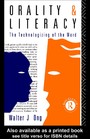
It is Ong!
I'm so gonna Ong it up for my English 618 (Linguistic and Rhetorical Approaches to Writing) paper. He is way venerable and awesome. Rhetoric, orality vs. literacy, grammar, fightin' with words -- to the death! Also he's a Jesuit. Sweet. I'm gonna write on links between orality and literacy and how we can teach writing with 'em!

Ong links @ delicious
The Walter J. Ong Collection
Ong links @ delicious
The Walter J. Ong Collection
Walter Jackson Ong, S.J. (1912-2003) was a professor of English at Saint Louis University for over thirty years. Over the course of his career, Ong wrote a number of groundbreaking studies in the fields of orality and literacy studies. Some of these works include Orality and Literacy: The Technologizing of the Word, The Presence of the Word, and Ramus, Method, and the Decay of Dialogue.
Subscribe to:
Posts (Atom)